7 Cardiology Lessons I Wish I’d Known as a New Grad
Valuble cardiology lessons for general practice


Severe left atrial enlargement, but not congestive heart failure, increases the probability of coughing in dogs with mitral valve disease. Rishniw, M., Borgarelli, M., Ferasin, L., & Menciotti, G. (2025). Journal of the American Veterinary Medical Association, 1–6. Advance online publication. https://doi.org/10.2460/javma.25.07.0507
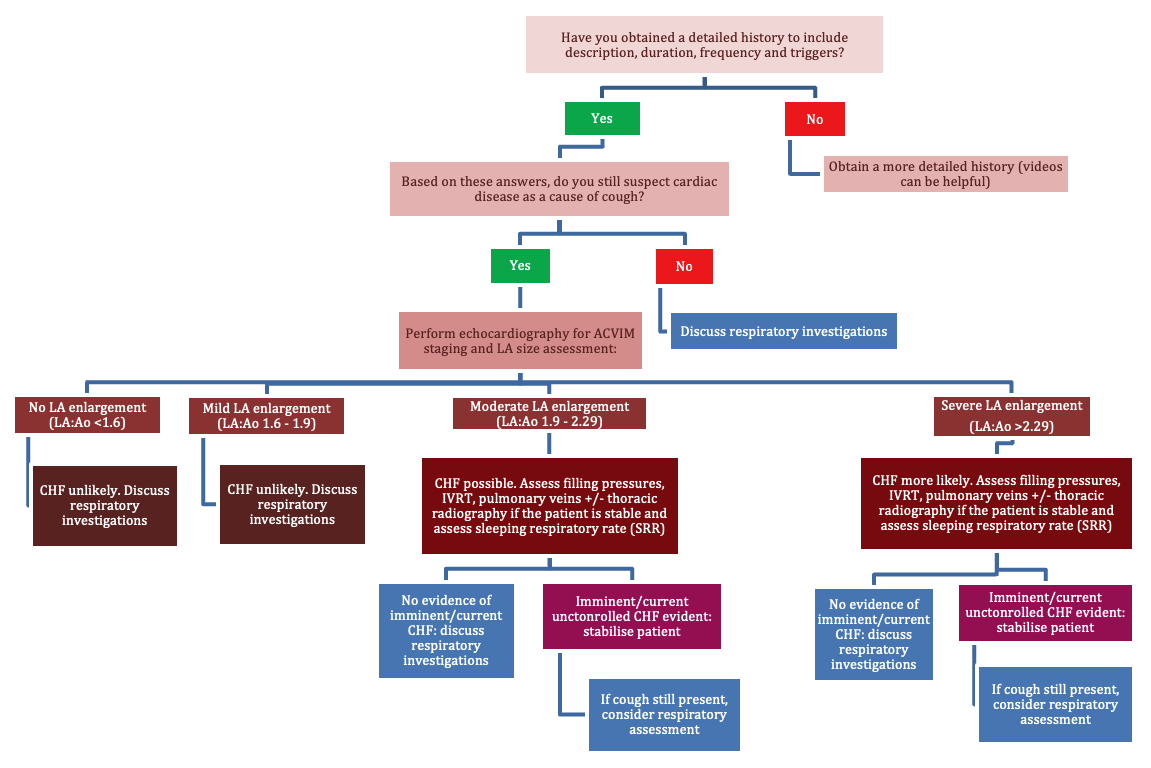
When a patient with known (or suspected) mitral valve disease develops a more frequent or severe cough, it is often assumed that pulmonary oedema has developed – a view still repeated in textbooks, despite limited evidence. While dogs with confirmed congestive heart failure (CHF) can cough, CHF is not typically the primary cause, even when the cough appears to improve with diuretics (which have their own antitussive effects). This paper highlights some very important considerations to your case management. Let’s Dive in…
The authors examined dogs diagnosed with myxomatous mitral valve disease (MMVD) to determine whether left atrial enlargement, coughing and the presence of left-sided CHF were associated.
This was a retrospective analysis pooling data from two earlier studies (2013 and 2020), encompassing 352 small-breed dogs presented to referral practice. Dogs were categorised by degree of left atrial enlargement (calculated using LA:Ao ratio into ‘none’, ‘mild’, ‘moderate’ or ‘severe’), coughing status (‘yes’/ ‘no’) and CHF status (‘present’/ ‘absent’).
Although this study relies on pre-existing datasets, it raises an important point about our habitual reliance on cough as an indicator of CHF. Clinically, we frequently see MMVD patients whose cough is far more attributable to airway disease than to pulmonary oedema. Many are started on diuretics unnecessarily and later considered “unresponsive” or “resistant” to standard CHF therapy, when the true issue is unrecognised respiratory disease. Even those who’s cough improves or resolves with frusemide may simply be experiencing its antitussive effects rather than genuine improvement in CHF, at the expense of renal function.
To more definitively determine whether severe left atrial enlargement is a primary driver of cough in MMVD, a prospective study including standardised respiratory diagnostics would be needed. For now, however, this paper provides a timely reminder to carefully consider all possible causes of cough in these patients – and to avoid relying on cough alone when diagnosing congestive heart failure.
Don’t forget, if you need case advice or your client is motivated for referral, we are here to help!
Valuble cardiology lessons for general practice
Veterinary Technician Specialists in cardiology – the inside scoop