
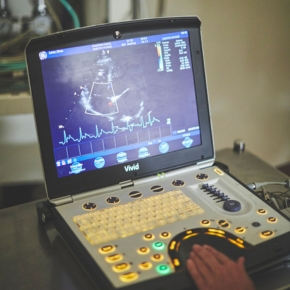
4 Reasons to Book an Echo Course this Autumn/Winter
From clinical confidence to career development, echocardiography is a skill that keeps on giving. Choose from our three upcoming courses to suit every level.
In human medicine, patients with severe mitral regurgitation are typically offered surgical repair once they become symptomatic. In veterinary practice, our approach is still very different! Pimobendan transformed our medical management of myxomatous mitral valve disease (MMVD), and for most dogs, medical therapy remains the cornerstone of treatment – even once they reach ACVIM stages C (congestive heart failure) and D (refractory to treatment of congestive heart failure).
That said, surgical mitral valve repair is an option for our cases in the UK. It is currently only offered at the Queen Mother Hospital for Animals at the Royal Veterinary College, performed by their cardiothoracic surgery team under cardiopulmonary bypass.
Although many owners ask us about surgery, only a small proportion actively pursue it. That picture is slowly changing, and we are referring an increasing number of cases – some with excellent outcomes. One useful reminder is not to assume affordability: a surprising proportion of dogs accepted for surgery are uninsured, with informed, self-funding owners who want to explore every option.
Contact us for case specific advice
So, what is helpful for you to know in general practice?
There is no expectation for first opinion vets to know procedural detail, survival statistics or selection criteria in depth. Equally, there should be no pressure to decide whether a patient should have surgery. Your local cardiologist plays a key role in assessment and discussion, but the final decision about suitability rests solely with the cardiothoracic surgical team.
Dogs with advanced ACVIM stage B2, C or D MMVD, supported by appropriate echocardiographic findings, may be considered.
Asymptomatic dogs (ACVIM stages B1 and early B2) are not candidates. Their quality of life is not yet affected, disease progression can take years, and it is not ethically justifiable to subject them to major open-heart surgery at this point.
Dogs in stage D can still achieve good outcomes, although risks are understandably higher. Patients with significant concurrent non-cardiac disease are unlikely to be suitable, and practical factors such as size, likely tolerance for post-operative recovery period and detailed valve anatomy (assessed at the RVC using 3D and 4D echocardiography) are also important.
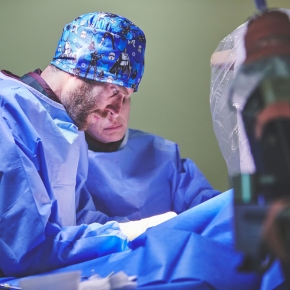
Under cardiopulmonary bypass, ruptured or stretched chordae tendineae are replaced with Gore-Tex sutures. A valve annuloplasty (purse string suture around the valve) is then performed to reduce the volume of regurgitation.
In addition to the inherent risks of anaesthesia and open-heart surgery in patients with advanced cardiac disease, there are procedure-specific complications to be aware of.
Thromboembolism is the most common post-operative risk, despite anticoagulation medications. Ventricular arrhythmias are frequently seen in the days following surgery. Repair failure is possible. A systemic inflammatory response following surgery is almost inevitable and requires careful management, and cases of acute pancreatitis have also been reported.
Between 2005 and 2025, the RVC report an overall success rate of approximately 80% across 267 dogs undergoing mitral valve repair.
In the best cases, dogs with severe structural disease show progressive reverse remodelling and even normalisation of cardiac dimensions to the point of discontinuing all cardiac medication. Regular echocardiographic follow-up is required during the first 12 months after surgery, and these costs are additional to the procedure itself.
More information can be found on the RVC Cardiothoracic surgery page at https://www.rvc.ac.uk/small-animal-vet/specialist-referrals/advanced-techniques/cardiothoracic-surgery
If you’ve got a case you’d like to refer for cardiologist assessment and further surgical discussions, head to our referral page. If you’d rather some case specific advice, we can help with this too!
From clinical confidence to career development, echocardiography is a skill that keeps on giving. Choose from our three upcoming courses to suit every level.
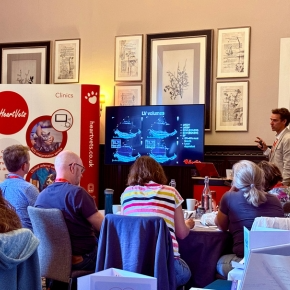
We offer a variety of learning opportunities throughout the year – now’s your chance to let us know what, where and how you want to learn.