
7 Cardiology Lessons I Wish I’d Known as a New Grad
Valuble cardiology lessons for general practice

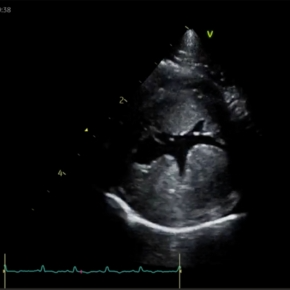
Although heartbreak is one of life’s worst experiences, “dying from a broken heart” isn’t just a dramatic song lyric. In people, Takotsubo cardiomyopathy (also known as “broken heart syndrome”) is triggered by severe physical or emotional stress. It causes transient heart muscle dysfunction that mimics a heart attack, including shortness of breath, chest pain, and ECG changes. Unlike a true myocardial infarction, there is usually no significant coronary obstruction, and many patients recover fully with supportive care.
Discuss your case with HeartVets
Emerging evidence suggests that some cats can also develop reversible cardiac changes following stress, including a traumatic event or anaesthesia. These cats often present exactly like hypertrophic cardiomyopathy (HCM) with congestive heart failure (CHF), myocardial thickening, arrhythmias, and tachycardia.
Despite presenting like HCM with CHF, follow-up often shows reverse remodelling, sometimes even after stopping treatment. In the absence of other causes of an HCM phenotype, this condition is termed Transient Myocardial Thickening (TMT).
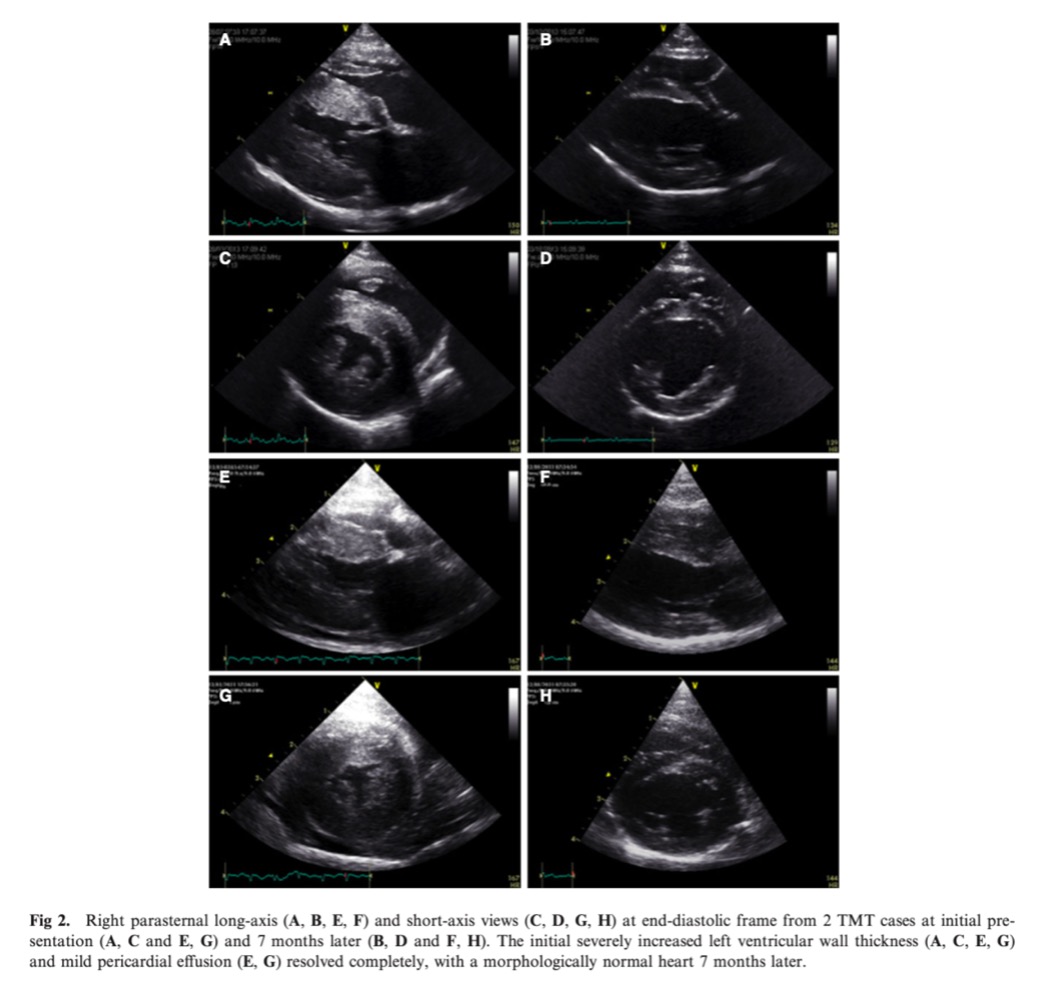
These comparative images are taken from a paper on TMT associated with CHF in cats (Novo Matos J, Pereira N, Glaus T, et al. Transient Myocardial Thickening in Cats Associated with Heart Failure. J Vet Intern Med. 2018;32(1):48-56. doi:10.1111/jvim.14897) (https://pubmed.ncbi.nlm.nih.gov/29243322/ )
Unsure if the HCM phenotype fits the clinical picture? Discuss your case with HeartVets or refer to our cardiologists for further investigations.
Need support with follow-up echocardiography or medication titration? Find out how HeartVets can support ongoing case management
Remember that HCM is a diagnosis of exclusion – you need to actively search for and screen out other causes of left ventricular hypertrophy. In a cat over 8 this includes systemic hypertension and hyperthyroidism, in younger cats think of TMT and in cats of any age, acromegaly is a (rare) consideration. While TMT is far less common than HCM, recognising it can dramatically affect management, prognosis, and owner communication. Echocardiography, clinical monitoring, and attention to recent stressors are key to identifying these cases.
Ready to discuss your case with HeartVets
Valuble cardiology lessons for general practice
Veterinary Technician Specialists in cardiology – the inside scoop