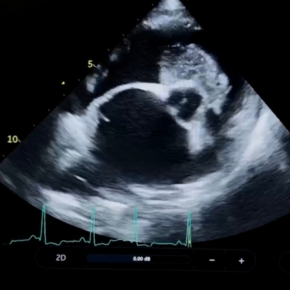
How pimobendan can change echocardiographic findings
Avoid misclassification of mitral valve disease in dogs receiving pimobendan

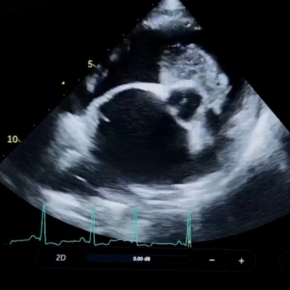
Echocardiographic Changes in Dogs with Stage B2 Myxomatous Mitral Valve Disease Treated with Pimobendan Monotherapy. Crosland A, Cortes-Sanchez PM, Sudunagunta S, et al. Vet Sci. 2024;11(12):594. Published 2024 Nov 25. doi:10.3390/vetsci11120594
What harm is there in starting pimobendan without echocardiography when you’re pretty sure that heart murmur is mitral valve disease?
We all know that pimobendan is indicated only in ACVIM stages B2 and C, but it can still be tempting to start it without investigation – especially when progression feels inevitable. We frequently see changes in echocardiographic measurements once patients have been on pimobendan for a while. This study highlights an important point to consider before taking that shortcut.
To assess how pimobendan monotherapy affected heart size over time (specifically left atrial and left ventricular dimensions) in dogs with myxomatous mitral valve disease.
Echocardiographic data from 31 dogs with myxomatous mitral valve disease presenting to two referral centres was retrospectively analysed. Dogs were divided into a control group (7 dogs not receiving pimobendan) and an intervention group (24 dogs receiving pimobendan in accordance with the 2019 ACVIM consensus criteria). All dogs had no evidence of congestive heart failure, had no concurrent congenital or acquired structural cardiac disease, had no systemic hypertension or significant systemic illness, and were not receiving any other cardiac medications (including diuretics, ACE inhibitors, spironolactone or amlodipine).
Patients were assessed longitudinally at two time points: the initial assessment and the first follow-up examination.
Dogs receiving pimobendan showed a reduction in normalised diastolic left ventricular internal dimension (LVIDdN) and a decrease in LA:Ao at follow-up, showing evidence of reverse remodelling in patients with Stage B2 MMVD treated with chronic pimobendan monotherapy.
Although far from a perfect study design, the findings mirror what we regularly see in clinical practice, and this is the first published evidence explaining how misclassification of MMVD can occur. It reinforces the importance of performing echocardiography before starting pimobendan and of re-evaluating patients over time. Crucially, dogs demonstrating reverse remodelling should not have pimobendan withdrawn simply because they no longer meet the numerical criteria for Stage B2 at follow-up.
Don’t forget, if you need case advice or your client is motivated for referral, we are here to help!
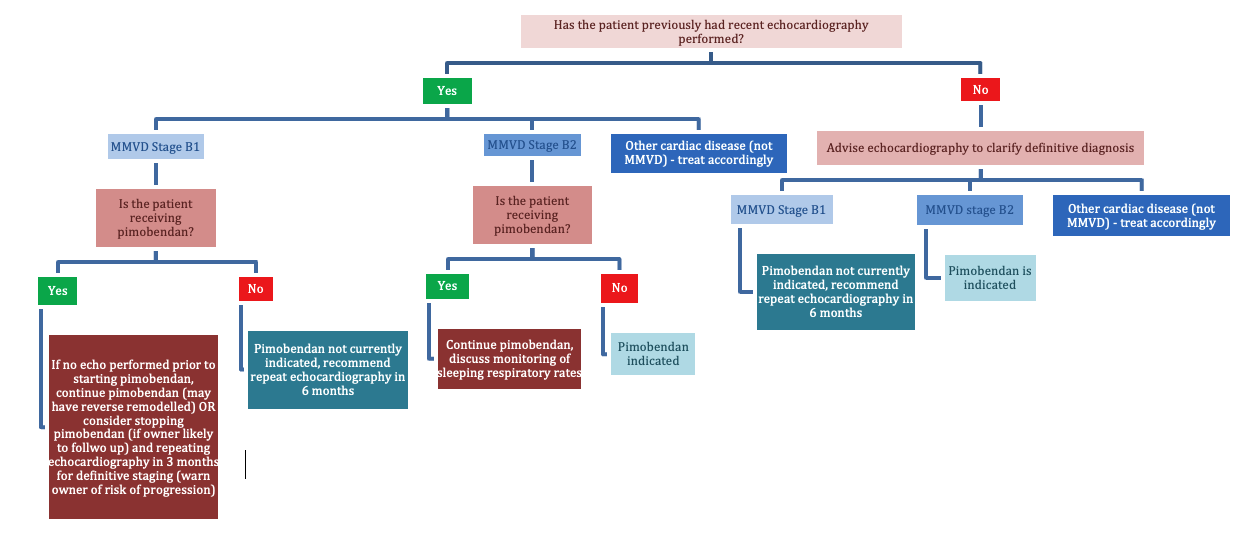
Avoid misclassification of mitral valve disease in dogs receiving pimobendan

Understand how left atrial size can cause a cough in dogs with mitral valve disease in our article.